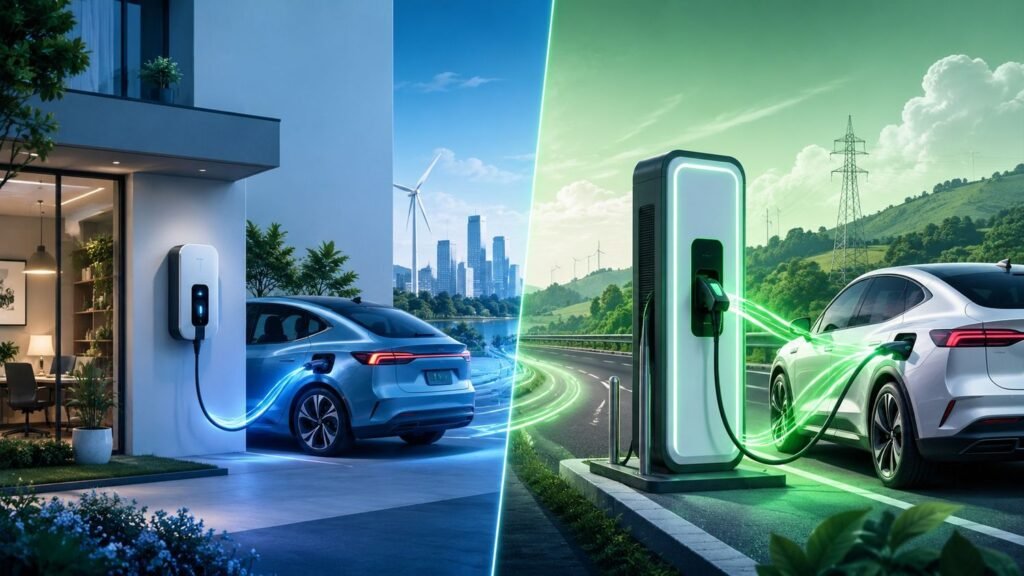
One of the first decisions in any charging project is choosing between AC and DC power. Understanding AC vs DC fast charging helps site owners match the right hardware to their location, budget and customer dwell time.
How AC Charging Works
AC chargers deliver alternating current to the vehicle, which uses its onboard converter to charge the battery. Typical AC units range from 7kW to 22kW. They are cost-effective and ideal where vehicles park for longer periods.
- Best for: workplaces, hotels, residential communities, long-stay parking.
- Charge time: several hours for a full charge.
How DC Fast Charging Works
DC chargers convert power externally and feed direct current straight into the battery, bypassing the onboard converter. This enables far higher power — from 50kW up to 350kW ultra-fast charging.
- Best for: highways, fuel-style forecourts, fleets and high-turnover retail.
- Charge time: 15–40 minutes for a substantial top-up.
Choosing the Right Mix
Many successful sites blend both: AC units for value and coverage, plus a few DC chargers for drivers who need speed. The optimal ratio depends on expected dwell time, grid capacity and target utilisation.
Planning Considerations for the UAE
Before deployment, assess available grid power, cooling requirements for high-power DC units, payment integration and future scalability. A turnkey EPC approach — engineering, procurement, installation and commissioning — reduces risk and speeds time to revenue.
Not sure which solution fits your site? Ask our EV division for a tailored charging plan from 22kW AC to 350kW DC.