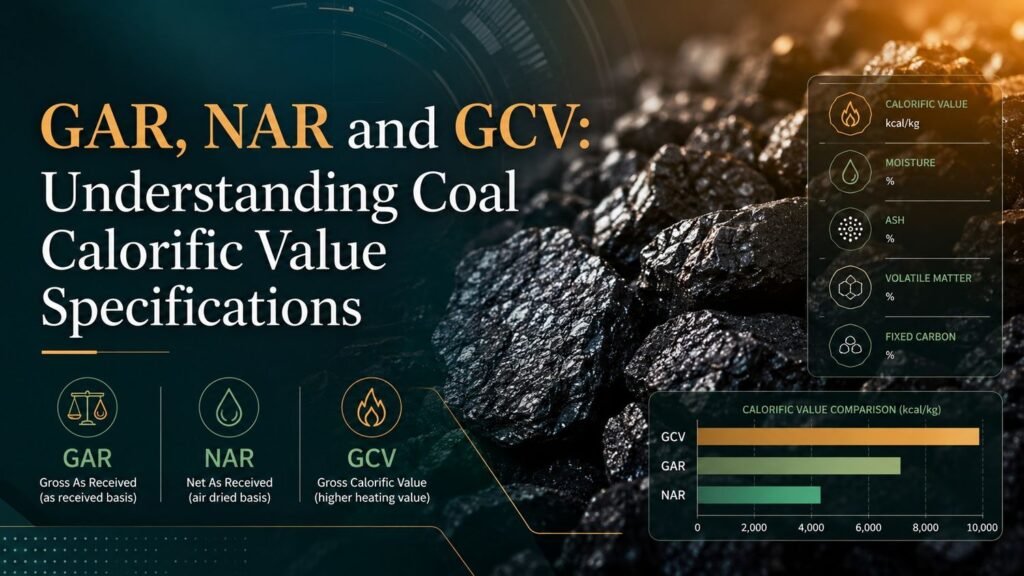
Understanding coal calorific value is essential for any buyer comparing offers. Coal is priced primarily on its energy content, but that content can be quoted on several different bases — GAR, NAR and GCV. Confusing them can lead to costly mistakes.
What Is Calorific Value?
Calorific value measures the heat energy released when coal is burned, usually expressed in kilocalories per kilogram (kcal/kg). The higher the value, the more energy each tonne delivers.
GAR — Gross As Received
GAR reflects the energy content of coal in the condition it is delivered, including its total moisture. Indonesian steam coal is almost always quoted in GAR (for example, GAR 4200 or GAR 5000), which is why it is the most familiar basis for Asian buyers.
NAR — Net As Received
NAR subtracts the energy lost to vaporising moisture and hydrogen during combustion, so it is always lower than GAR for the same coal. Russian and higher-rank coals are frequently quoted in NAR, giving a more realistic picture of usable energy.
GCV — Gross Calorific Value
GCV is often reported on an air-dried or dry basis in laboratory analysis and is used for anthracite and metallurgical grades. Because the moisture basis differs, a GCV figure cannot be compared directly with GAR without conversion.
Comparing Grades Fairly
- Always confirm the basis (GAR, NAR, ADB or dry) before comparing prices.
- Convert offers to a common basis using the moisture and hydrogen values on the specification sheet.
- Remember that lower-moisture coal usually delivers more usable energy per tonne, even at a similar headline number.
Need help matching the right grade to your boiler or process? Talk to our coal specialists for tailored guidance.